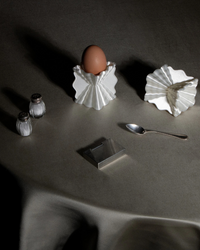
From Spain’s rich ceramic heritage to nature-inspired vases produced in A Coruña, alongside studio-led pieces from Madrid and Barcelona, this collection brings together Spanish-made objects shaped by regional cultures and a confident approach to form, colour, and material.
Spanish craftsmanship carries a strong relationship to colour, narrative and material texture. From hand-painted ceramics to straw marquetry and woven textiles, decorative arts in Spain evolved alongside daily rituals, particularly around the table and within the home.
This collection reflects regional ceramic traditions, natural fibre techniques and expressive surface work. Objects are often playful in motif yet grounded in solid construction, combining durability with visual presence shaped by Mediterranean light and proportion.
What defines Spanish ceramic tradition?
Spain has a long history of ceramic production, particularly in regions such as Valencia and Andalusia. Techniques include hand-painting, layered glazing and high-temperature firing that ensures durability.
Motifs often reference nature, food and everyday life. While decorative in appearance, these pieces are built for practical use, with weight and firing quality designed for repeated handling.
How does straw marquetry differ from wood marquetry?
Straw marquetry uses flattened and dyed straw applied in geometric or radial compositions. Unlike wood veneer, straw reflects light differently depending on direction, creating subtle tonal shifts.
The technique requires careful alignment and pressure control to maintain surface stability. When applied to lamps, it produces warmth through both material and light diffusion.
Why is colour so prominent in Spanish craft?
Spanish decorative traditions developed in regions with strong natural light. Colour functions not as embellishment alone but as a structural element within the object.
Contrast between glaze, pigment and base material enhances visibility and definition. In tableware and decorative ceramics, colour often emphasises rim, border or form rather than covering the entire surface uniformly.
How are tradition and contemporary design balanced?
Many Spanish workshops preserve traditional techniques while adapting scale and motif to modern interiors. Forms remain simple and stable, while surface work carries expressive detail.
This balance allows pieces to integrate into contemporary spaces without losing regional identity.